
Paris 2012: McLaren debuts P1 as the ultimate supercar
Twenty years after the McLaren Automotive debuted its first car - the successful F1 supercar, comes the P1 as the high performance car manufacturer aims for glory once again.
Staff Writer
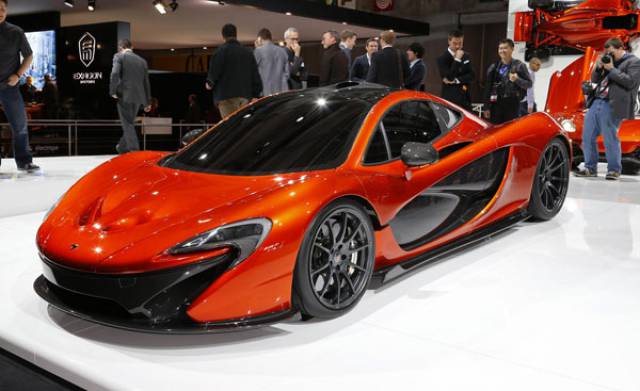
Twenty years after the McLaren Automotive debuted its first car - the successful F1 supercar, comes the P1 as the high performance car manufacturer aims for glory once again in its first international motor show appearance. The P1 is not only touted as McLaren's next supercar but will be the ultimate supercar with the simple goal of being the best driver's car in the world on road and track.
The preview at the Paris Motor Show this year is a design study, as the company plans to reveal the actual production version next year which they plan to sell within the next twelve months.
"Our aim is not necessarily to be the fastest in absolute top speed but to be the quickest and most rewarding series production road car on a circuit", says McLaren Automotive Managing Director Antony Sheriff.
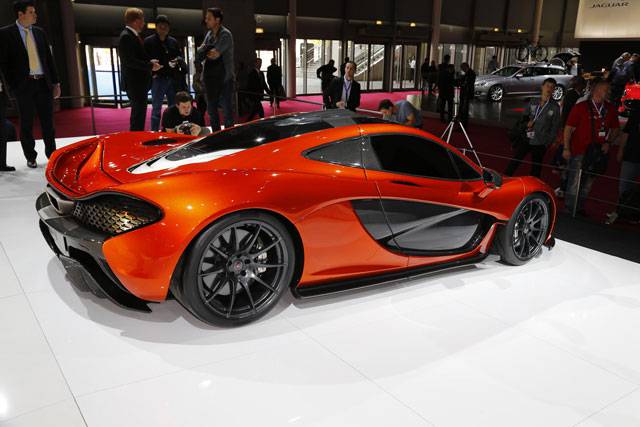
The McLaren P1 leverages five decades of McLaren's motorsport skills. It was designed from the outset to prioritize aerodynamic performance and spent many hours in a wind tunnel and using CFD (computational fluid dynamics) aerodynamic modelling - just like a Formula One car.
The new McLaren P1 has much higher levels of downforce than any current road car - 600kg is achieved well below maximum speed. That is approximately five times as much downforce as a McLaren 12C. Its margin over most other high performance supercars is even greater. The McLaren P1's downforce is similar to current sports racing cars, including the 12C GT3 racer.
Despite the huge performance, the McLaren P1 will also be a refined and comfortable high speed supercar. "It is designed to be driven to the racing circuit, with great levels of comfort and refinement," says Sheriff. "And then to be used on the racing circuit, where it will offer an experience matched only by purpose-built race cars."
The McLaren P1 showcases McLaren Automotive's advanced motorsport-based engineering, prioritising high performance through state-of-the-art technology. It will feature notable advances in weight reduction, packaging, high-speed performance, materials (especially carbon fibre), powertrain and in aerodynamics.
No exact details have been given as to what exact engine will power the P1, it will have a mid-engine layout. Program Director Paul Mackenzie only revealed that "the McLaren P1 will have an immensely powerful engine, super brakes and state of the art suspension controls with a power-to-weight ratio of over 600 PS per ton."
The McLaren P1 prioritizes function over pure style, which is very much part of the McLaren ethos. The McLaren P1 also has a DRS (drag reduction system) function, like a Grand Prix car, to reduce downforce and increase straight line speed. But while a Formula 1 car has a moveable flap in the rear wing, the McLaren P1's rear wing's pitch is adjusted.
As with the legendary McLaren F1 road car of 1992, the McLaren P1 is a mid-engine design that uses a carbon fibre monocoque and roof structure safety cage concept called MonoCage which is a development of the MonoCell used in the current 12C and 12C Spider. The structure of the MonoCage, unlike the 12C's MonoCell, also serves to guide air into the engine through an integral roof snorkel and air intake ducts, saving further weight. All the body panels are carbon fibre to reduce weight. This carries on a McLaren innovation: it was the first company to offer a full carbon body Grand Prix car (in 1981) and the first to offer a full carbon body road car (the F1).
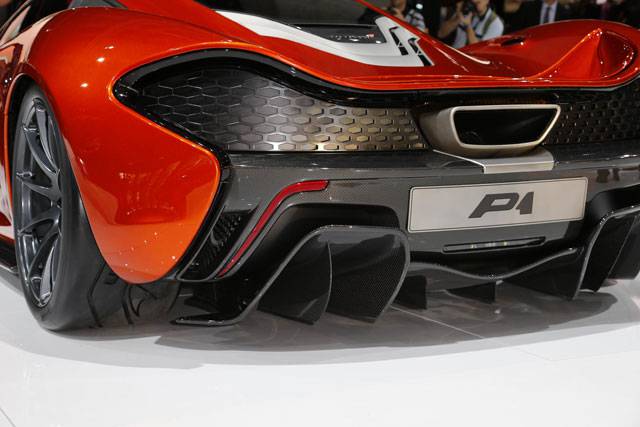
The McLaren P1 follows in the footsteps of the classic McLaren F1 as the 'ultimate car' offering. The name ties in with Grand Prix racing. P1 means first place - and McLaren has 180 GP victories in its 46 year Formula One history - or position one on the grid (McLaren has scored 153 pole positions). There is also heritage in that name: the McLaren F1 was initially known as Project 1, or P1
The McLaren F1 was lauded as the greatest supercar of its era when it was first shown 20 years ago. At the time, it was the world's most technologically advanced and fastest supercar.
Related Posts
Toyota PH launches T-OPT aftermarket brand at MIAS 2026
Toyota Motor Philippines officially introduces T-OPT, which is their latest premium regional aftermarket parts brand

MIAS 2026: GWM Tank 700 PHEV makes first overseas market debut in PH
The GWM Tank Hi4-Z PHEV arrives in PH just weeks after it debuted in the PRC

BYD “Drive Electric, Love Pinas” campaign sets two Guinness World Records
BYD and Department of Tourism’s “Drive Electric, Love Pinas” campaign makes it to Guinness World Records

Suzuki Philippines expands Laguna pre-delivery inspection facility
The upgrade lets SPH meet demand while upholding global quality standards
MIAS 2026: Geely PH previews EX2 EV to rival BYD Dolphin
Geely previews the EX2 at 2026 Manila International Auto Show; could start at PHP 950K

MIAS 2026: Jaecoo J5 HEV is priced to compete; starts at PHP 999K
OJPH wants to stir the B-SUV market with the J5 HEV